

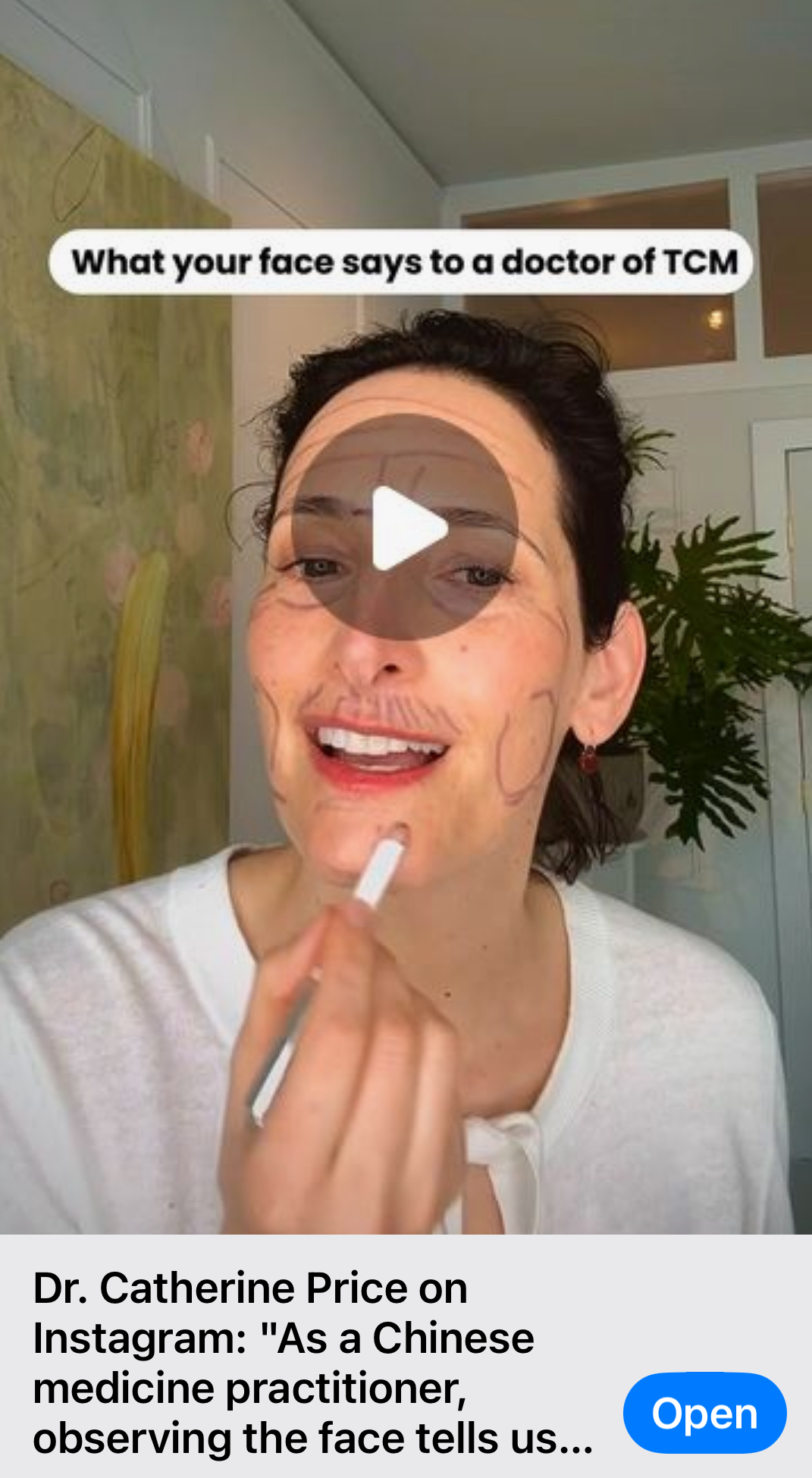
 How I use face reading in my practice to gain insights into a patient's health
Hi ,
I wanted to share some thoughts on the concept of "face reading" or 'Mien Shiang' in Chinese, it's a practice that dates back thousands of years and is an integral part of Traditional Chinese Medicine (TCM). It involves analyzing the face's shapes, markings and features to gain insights into a person's health and life.
This diagnostic tool is based on the belief that the face is a reflection of the body's internal functions, both physical and emotional.
Face reading is grounded in the principles of Chinese Medicine, which asserts that Qi (vital energy) and blood flow through the body's meridians and can manifest on the face when there are imbalances or blockages. The face is mapped out into zones that correspond to different organs and systems within the body. For instance, the forehead is associated with the bladder and intestines, the area between the eyebrows relates to the liver, the cheeks are connected to the lungs and respiratory system, and the chin is linked to the hormonal system.
As a practitioner, I generally begin by observing the color, texture, and appearance of the skin on the face. For example, a pale complexion might indicate a deficiency in Qi or blood, while a red face could suggest heat or inflammation in the body. The presence of acne or discoloration in specific areas of the face can point to issues with the corresponding internal organs
Watch a short video showing face reading here.
When analyzing facial features, the size, shape, and position of facial features are also significant. Large, bright eyes may indicate strong Shen (spirit), while sunken eyes could suggest a depletion of Qi or kidney issues. The shape of the nose can provide clues about the health of the heart, and the condition of the lips can reflect the state of the digestive system.
When observing face markings and lines, we look for things like deep horizontal lines on the forehead that might be interpreted as a sign of stress affecting the bladder and digestive system. Vertical lines between the eyebrows, often called "the liver lines," can indicate emotional stress or liver imbalance. I hope you find this as interesting as I do. It's a miracle we are alive. As always, I am here for you.Have a peaceful weekend.
Sending warmth, Dr. Catherine P.S. Share this with someone who needs to hear this 🫶. WATCH THE VIDEO