The Healing Is in the Music
Music is the language of acupuncture.
Each practitioner has her own vibration. She hears the troubles of the woman in front of her, and the two resonate — and make a sound. It is inaudible. It is also completely palpable.
Each acupoint has its own vibration, too. At the bottom of the feet, where the work is to ground the body, the sound is low. Whales, or monks. At the very top of the head, where the fontanelle once was, at the point we call Governing Vessel 20, it sounds like a bell. Bright and clear. It opens the crown.
These are sounds the human ear cannot hear. The body hears them fine.
And thus it begins to open.
Then there is actual sound
Aside from all of that, real audible sound has played a role in my practice for decades, and my sense of how it works in the body has kept changing the whole time.
For years it was ambient. I have beautiful speakers, and for clients who like a room to have a mood, that's still what I use. But the real game-changer came with headphones.
And it came, as these things do, from a problem. Loud neighbors.
My clinic was next door to a hair salon. Thin walls. The gossip and the shrieks came right through, in the middle of treatments, at exactly the volume you would expect from a room full of people getting their color done.
So I started using a Berlin-based music app called Endel, paired with the right set of headphones. My clients could no longer hear the racket next door. What began as damage control turned into something better than what I'd had before.
Any audiophile will tell you the difference. Listening to music on speakers is one thing. Listening through quality headphones feels like the sound is germinating inside of you. It even migrates from one ear to the other, exactly as the musician intended it to.
DJ-ing the treatment
The app lets me build the sound around the woman on the table, based on what she's actually going through.
For a client who feels stuck in her life, I choose something calming but with great movement in it. For a client with insomnia, more of a lullaby. For a client dealing with dryness, whether it's eyes, skin, or mouth, I often go to the sound of rain, pitter-pattering.
This is the treatment, not the ambiance. Chinese medicine is the practice of finding harmony in a body: seeking out where things are out of balance, and adjusting. That's done with needles, certainly. With stones. With aromatherapy. And it's done by choosing sound that helps a woman reconnect to herself and disconnect from the world, even for one hour.
Don't we all need this break?
For a lot of people, music is the way in. It gets past the part of you that is still managing your calendar.
Instruments come into it too. Singing bowls some days. I've written separately about the older traditions of sound as medicine, which run back a lot further than my speakers do. I use tuning forks directly on the body. That deep, sonorous vibration both stimulates the acupuncture point and lets a woman feel her own inner landscape shifting under her.
I'll be straight with you about the evidence here: the research on tuning forks specifically is thin. There are small pilot studies suggesting vibration applied to acupuncture points raises pain tolerance, and not much beyond that. I use them because of what I watch happen in the room, not because there's a large trial behind them. The broader claim, that sound changes the state of a nervous system, is on much firmer ground.
And then there's the coming back. Sometimes, leaving the cocoon of a treatment, my clients are a little out of it. Like monks after a long meditation. Peals of bells and chimes are what brings them back gently, instead of the world doing it for them.
We are built for this
Our brains are hard-wired to resonate with music. Whole books have been written about it, most famously Oliver Sacks' Musicophilia and Daniel Levitin's This Is Your Brain on Music.
There's nothing else like it. Perhaps the sense of smell, which can drop you into a different decade without warning. But otherwise, nothing. Music reminds us of our early adulthood, our teenage years. It makes us go a tad faster on the stair climber at the gym. Excitement actually changes our physiology.
Here's the measurable version. A meta-analysis of 24 randomized trials covering nearly 1,300 people found that music shifts heart rate variability toward parasympathetic dominance. That's the rest-and-digest side, one of the better readouts we have on how a nervous system is actually doing. Two details from that analysis I find useful in the studio: the effect was strongest in people dealing with emotional and sleep disturbance, and sessions of thirty minutes or less worked just fine. You do not need a retreat.
Harvard Health has covered the same territory: seven to seventy minutes of listening nudges people toward the relaxation response, with lower blood pressure and, in some studies, measurable drops in salivary cortisol. And a Cochrane review, Cochrane being about as conservative as evidence review gets, found moderate-quality evidence of large short-term effects for music therapy added to usual care for depression, with no more adverse effects than usual care alone.
Which is to say: when I tell you that sound is doing something to your nervous system, I'm not being poetic. I'm being literal, and so is the research.
Why the people in charge have always been nervous about it
Music is so completely powerful that it has also, consistently, been treated as a threat.
In 1324, Pope John XXII issued a papal decree, the Docta Sanctorum Patrum, banning the elaborate new polyphonic style from the liturgy. The complaint, more or less: these people are chopping up our melodies with short notes. The ornamentation had gotten too interesting, and it was pulling attention off the sacred text and onto the sound itself.
(You may have heard a spicier version of this story: that the medieval church banned the tritone as "the devil in music." That one is a myth. The phrase doesn't turn up until a music textbook in 1725. The 1324 decree is the real thing, and honestly it makes the point better.)
In the 1960s, parents were genuinely frightened about what rock and roll would do to their children.
And as recently as 1990, 2 Live Crew's album As Nasty as They Wanna Be was ruled legally obscene by a federal judge in Florida. Four days later, two members of the group were arrested for performing the songs. A record store owner was arrested for selling the album. The ruling was eventually overturned on appeal, but for two years, that music was a crime.
There may be a right to free speech. Apparently there is not always a right to free song.
Why is that?
Perhaps because music is our most ancient and most emotive art, and one of the most powerful things human beings make. It changes hearts, minds, emotions. It pulls reactions out of us across the entire range: tears at the opera, outrage, the uncomplicated pleasure of a pop love song. It moves us at a depth that institutions have never quite been able to supervise.
One last thing, which I did not think was true
I had heard, somewhere, that an audience moved by a concert starts to share a heartbeat. That their heart rates drift toward the same rhythm. I assumed this was one of those beautiful things people say that falls apart the moment you check it.
I checked it. It's true.
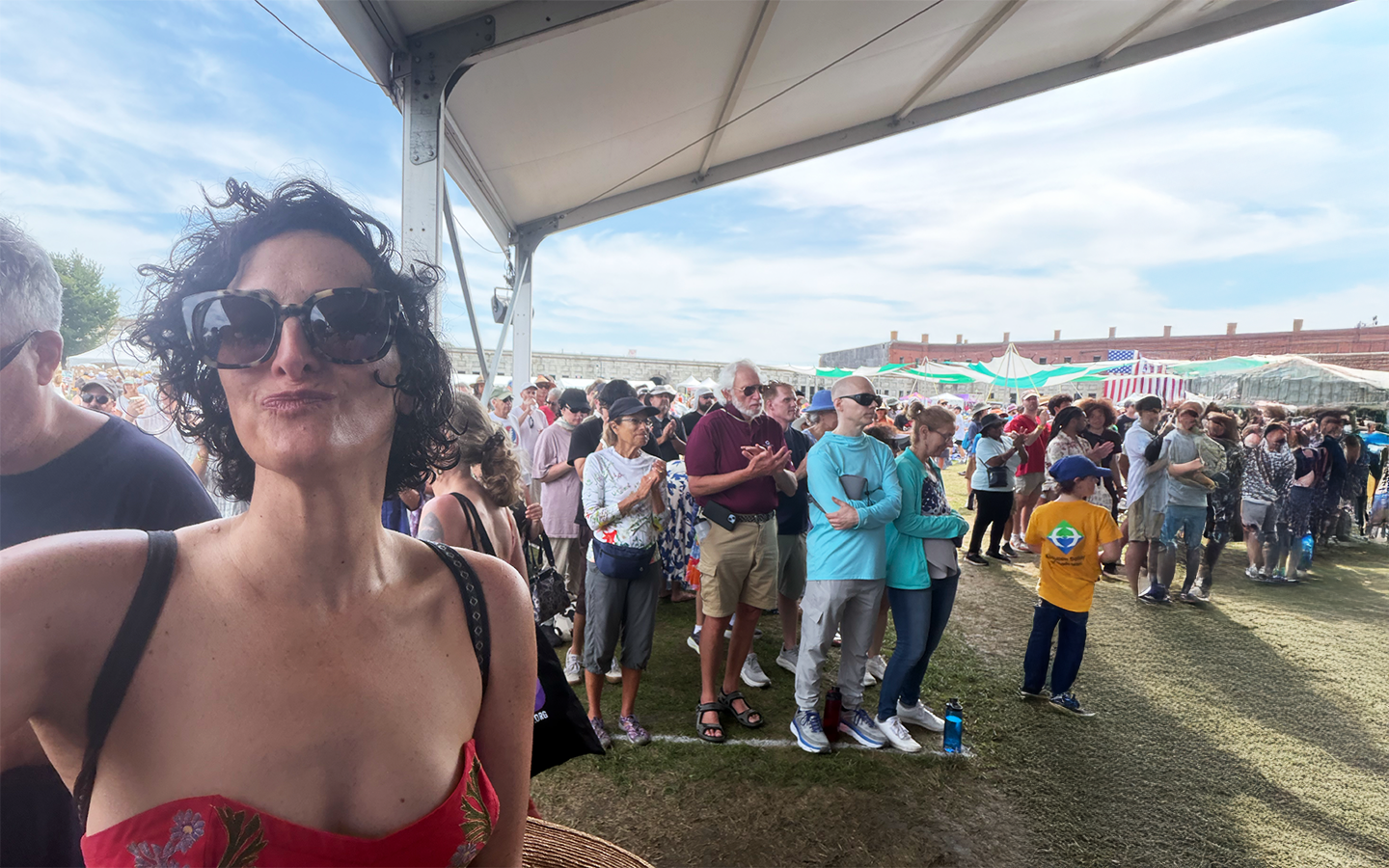
In a 2023 study published in Scientific Reports, researchers wired up 695 people at classical concerts and measured them through Beethoven, Brahms, and a contemporary piece by Brett Dean. Heart rate and heart rate variability synchronized across the audience. The synchrony was strongest in the listeners who reported being the most moved.
So: use the good headphones. Go to the concert.
Wishing you a wonderful time indulging your ears, your heart, and your mind with music.