

Building a Body for the Future: Why I'm Training Now for the Woman I Want to Be at 80
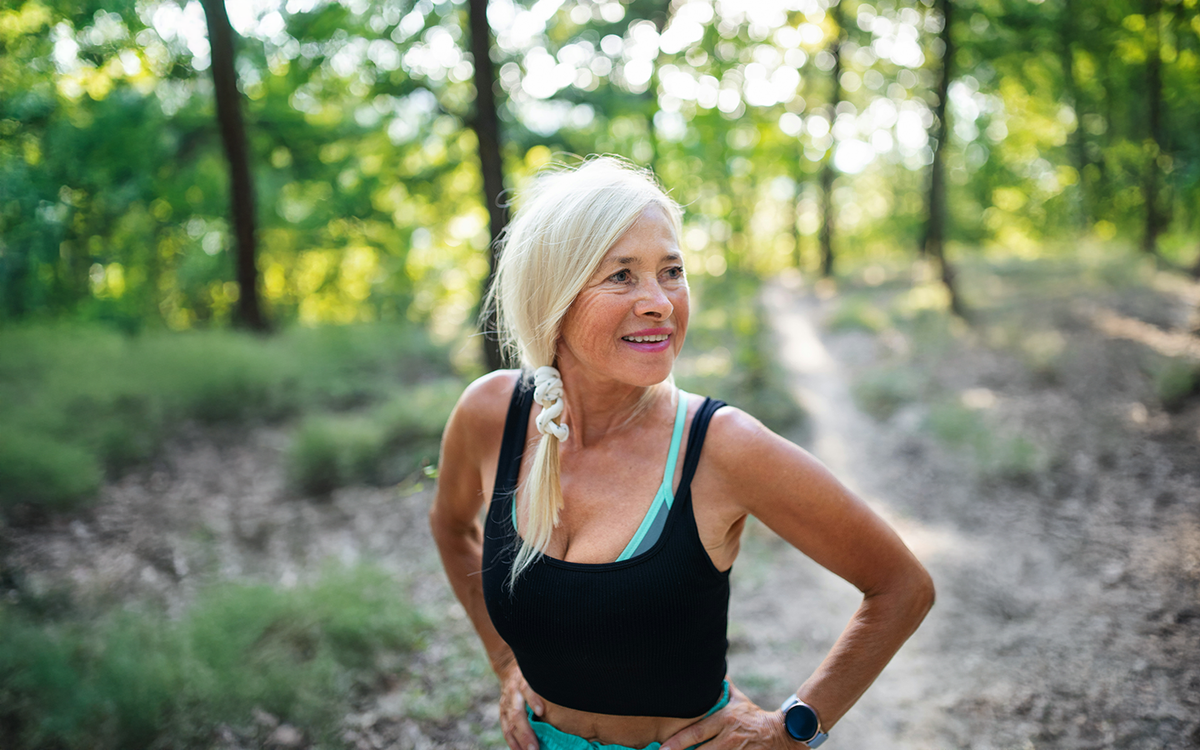
It often happens as the new year begins in the depths of the darkest days — resolutions are made, and many of them have to do with fitness. Maybe it's to start going to more spin classes or lifting heavier weights, but for the most part it has to do with a physicality regarding what is acceptable to us and perhaps to society, given our age, gender, and sex. Maybe it has to do with fitting into clothes that were flattering in the past. Perhaps there's a bathing suit one wants to don or a slinky little dress that one wants to get into for an event in months to come.
Most of these resolutions have to do with the short to maybe medium term. But what if we broaden our horizons and consider our physicality for the long term? What do we want to be doing with this body decades hence? So often decisions around fitness have to do with aesthetics, but honestly — it's sort of nice to know what this thing is made of. Can it go the distance in ways that will feel meaningful to ourselves?
I think it can. And I think the time to start building that body is right now.
My Father, the Physical Beast
For one who loves nature and loves movement, the idea of being in my 70s and 80s and being a bit on the frail side is not of interest. I have four children I currently love spending time with, and even this weekend, I'll be going skiing with many of them. Spring skiing in Vermont sounds great — but I imagine decades from now, more alpine adventures, perhaps in Europe, perhaps with these children's children, meaning my grandchildren. How will this body be kept up? I don't think I want to hang out in the lodge and just knit and let everybody else have all the fun.
I do have a real-life example of somebody who is a physical beast into his 80s. It's my dad.
My father, in his early 80s, is a professor at Brown and has exercised every day as far as I can tell for 62 or 63 years. One of my earliest memories is of cheering him on at the Boston Marathon and looking at feet that had gone the distance. For sure he was never going to be a foot model, but strong as he was and strong as he still is — barrel-chested and up until recently still competing in rowing, being one of eight men in a boat competing in masters competitions.
I too want to be strong when I'm old, but being a woman means perhaps there may be some different steps involved — having to do with hormonal regulation and trying to pack on the muscle while time allows. Also, being a woman, there may be some different nutritional things for me to consider that perhaps my father had not. Also, he got this far on drinking Slurpees, which I don't think is recommended by anybody but clearly seems to work...
The Plan: Dolomites, Mont Blanc, and Machu Picchu
So a plan needs to be made, and I'm starting to concoct the outline to be vibrant and strong when older. I've been doing some soulful exploration on the topic and of course gotten a DEXA scan to check out my bones. I even asked AI to start making my 20-year workout plan — for skiing in the Dolomites, for hiking Mont Blanc, and maybe even the Inca Trail to see Machu Picchu, which I have not seen yet, much to my great chagrin.
Having specific, audacious, decades-out goals changes the entire conversation. Suddenly the question isn't "How do I lose five pounds before summer?" It's "What does my body need to be capable of when I'm 72?" That is a profoundly different — and far more motivating — question.
Two Words Every Woman Over 40 Should Know
Seemingly, while keeping my heart ticking — the cardiovascular aspect cannot be neglected — but the real stickler has to do with muscle mass. So two terms for us to delve into: sarcopenia and osteopenia. I know that's a mouthful, but let's get into it.
Sarcopenia: The Silent Muscle Thief
Sarcopenia is the age-related loss of skeletal muscle mass, strength, and function. The word itself comes from the Greek — sarx (flesh) and penia (loss). And here's what makes it especially relevant for women in perimenopause and menopause: the menopausal transition is a critical inflection point.
The numbers are striking. Research published in the International Journal of Environmental Research and Public Health shows that sarcopenia prevalence jumps from about 7% in premenopausal women to 30% in late perimenopause and 32% in late postmenopause. After age 50, women can lose 1–2% of leg lean mass per year, with strength declining 1.5–5% annually.
Why does this matter beyond the numbers? Sarcopenic individuals have nearly double the odds of falls and fractures. In postmenopausal women specifically, sarcopenia increases the likelihood of a fragility fracture sixfold. That's the difference between skiing the Dolomites and being afraid of icy sidewalks.
Osteopenia: When Bones Start to Thin
Osteopenia is bone density that's lower than normal but hasn't yet crossed the threshold into osteoporosis. Think of it as the yellow light between green (healthy bones) and red (osteoporosis). A woman can lose up to 20% of her bone density in the 5–7 years following menopause as estrogen — which protects our bones — drops sharply.
Here's the connection that matters: muscle mass is one of the strongest determinants of bone density. Every time your muscles contract against a bone, they send a signal: stay strong, you're needed. Lose the muscle, and the bone follows. Sarcopenia and osteopenia are not separate problems — they are two sides of the same coin.
The DEXA Scan: Know Your Starting Point
This is exactly why I got a DEXA scan, and I'd encourage you to consider one too. DXA (Dual-energy X-ray Absorptiometry) doesn't just measure bone density — it simultaneously measures lean body mass and fat mass, giving you a complete picture of your body composition.
Your results include a T-score that compares your bone density to a healthy 30-year-old:
- Above -1.0: Normal
- -1.0 to -2.5: Osteopenia
- -2.5 or below: Osteoporosis
The USPSTF recommends screening for all women at 65, but many physicians — myself included — advocate for a baseline scan at the onset of menopause. Why wait until 65 to find out where you stand when you could have 15 years of proactive building behind you?
Lifting Heavy Things (Yes, Really)
If sarcopenia and osteopenia are the twin threats, resistance training is the twin solution. And I don't mean the little pink dumbbells — I mean lifting something heavy.
The landmark LIFTMOR trial studied postmenopausal women with low bone mass and found that 8 months of high-intensity resistance and impact training improved lumbar spine bone mineral density by 2–4% compared to low-intensity exercise — with no new fractures. A 2025 systematic review confirmed that high-intensity resistance training at 70% or more of one-rep max, performed three times per week, is optimal for improving bone density in postmenopausal women.
The beauty of resistance training is the dual payoff: you're preserving muscle and building bone simultaneously. Your muscles pull on your bones, and your bones respond by getting denser. It is elegant biology.
Your Heart Wants In on This Too
Now, I said cardiovascular fitness cannot be neglected, and the data backs that up dramatically. A Cleveland Clinic study of over 122,000 patients found that low cardiorespiratory fitness carried a higher mortality risk than smoking, diabetes, or coronary artery disease. Low fitness had a hazard ratio of 5.04 compared to elite fitness — smoking was only 1.41.
Even more striking: there was no upper limit to the benefit. The fitter you are, the longer you live — period. Each 1 mL/min/kg increase in VO2 max is associated with a 9% reduction in all-cause mortality.
This is why the plan isn't just about deadlifts and squats. It's about keeping that heart strong enough to hike at altitude, to keep up with grandchildren on a mountain, to have the engine capacity for a life fully lived.
Feeding the Future Body
Being a woman means some different nutritional considerations, and the big one is protein. The current RDA of 0.8 grams per kilogram of body weight was set to prevent deficiency — not to optimize muscle preservation for aging women. Research now suggests postmenopausal women need 1.0–1.2 grams per kilogram per day, and more if you're exercising regularly.
Here's a practical detail that surprised me: it's not just how much protein you eat but when. You need about 25–30 grams of protein per meal to maximally stimulate muscle protein synthesis. Most women backload protein — a small breakfast, maybe some yogurt at lunch, and a big steak at dinner. But your muscles can only use so much at once. Spreading protein evenly across three meals is a simple shift that makes a real difference.
Think about that the next time you're reaching for toast and coffee for breakfast. Your future self — the one on the Inca Trail — would really appreciate some eggs.
The Chinese Medicine Lens: Nourishing Your Essence
In Chinese medicine, we have a concept called Kidney Jing — your vital essence, one of the Three Treasures alongside Qi and Shen. Jing governs growth, reproduction, development, and aging. It's both inherited (Prenatal Jing, your constitutional blueprint) and acquired (Postnatal Jing, built through nourishing food, rest, and mindful living).
Here's what I love about this framework: the Kidneys in Chinese medicine "govern the bones" and "produce marrow." Thousands of years before DEXA scans, Chinese medicine practitioners understood that bone vitality and constitutional essence are intimately connected. Menopause, in this tradition, isn't a disease state — it's a natural transition in Kidney energy, one that can be navigated with wisdom and intention rather than fear.
Practices that preserve Jing align beautifully with what the research tells us: moderate, consistent exercise that strengthens without depleting. Adequate rest. Nourishing foods. Stress management that protects your reserves rather than burning through them. The ancient wisdom and the modern science point in the same direction.
Your 20-Year Adventure List
So here's what I'll leave you with — not a resolution, but an invitation. Close your eyes and picture yourself at 70. At 80. What do you want to be doing with your body?
Maybe it's skiing with grandchildren. Maybe it's walking the Camino de Santiago. Maybe it's gardening for hours without your back giving out, or picking up a grandchild without thinking twice. Maybe it's dancing at a wedding — really dancing, not sitting-at-the-table dancing.
Write it down. Make it specific. Make it audacious. And then start building the body that will carry you there.
Because fitness was never really about the dress. It's about the life you haven't lived yet — and the body that will let you live it fully, on your terms, with vitality and radiance to spare.
I'll be the one on the mountain.