

Second Spring: What Chinese Medicine Knows About Menopause That Western Culture Forgot
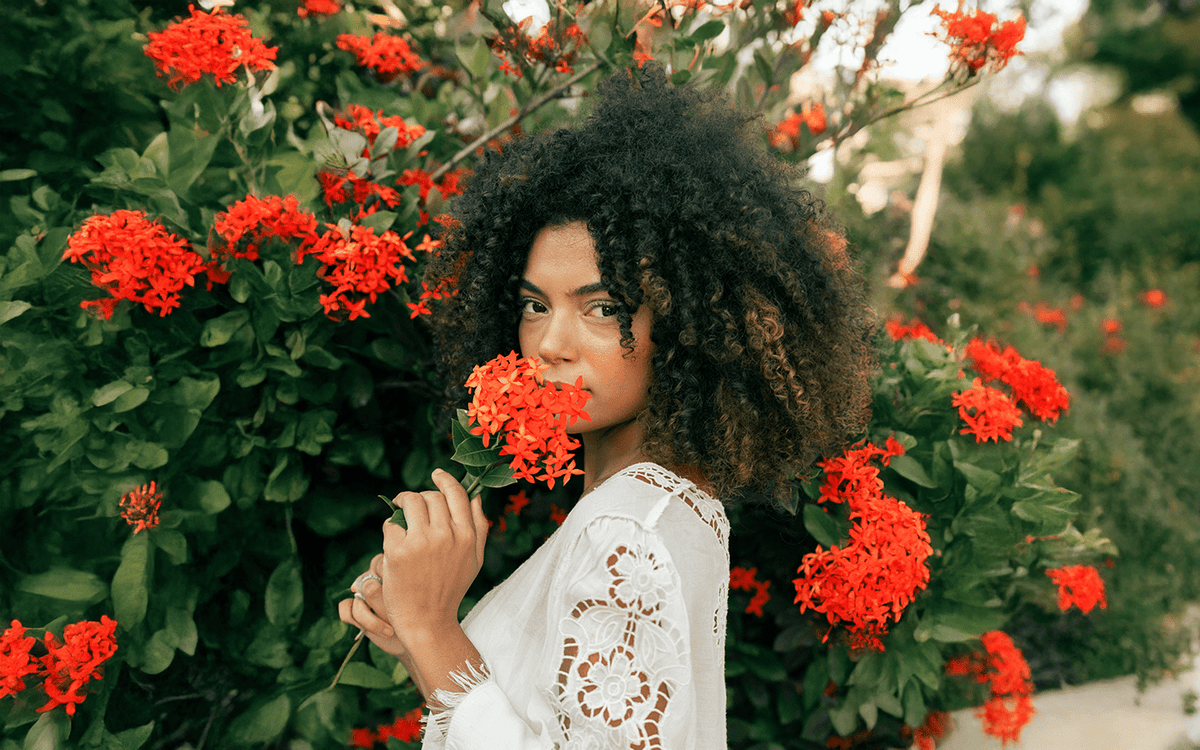
Sadly, there's no good press about being reproductively unviable. Fear and fear-mongering about menopause is absolutely having a moment, fueled in no small part by private equity–backed wellness companies whose entire business model depends on us feeling that something is deeply wrong with us. Buy the product, or become a female Teletubby with tufts of hair sprouting from your chin. And that, apparently, is the optimistic version.
We live in a youth-obsessed culture, but here's what's worth noting: studies show that in cultures where aging is genuinely valued, women have a dramatically different experience of menopause — less depression, fewer night sweats, fewer hot flashes. Anthropologist Margaret Lock spent over a decade comparing menopause experiences in Japan and North America and found that Japanese women reported hot flashes at a fraction of the rate American women did. The context we live in shapes the body we live in.
And within Chinese medicine, there is ancient, well-worn literature describing menopause not as a decline, but as a second spring.
What Is Second Spring?
In Chinese medicine, a woman's life unfolds in seven-year cycles — a framework laid out thousands of years ago in the Huangdi Neijing, the foundational text of Chinese medical philosophy. Each cycle marks a shift in how energy moves through the body: growth, fertility, maturation, and eventually, transformation.
At menopause — roughly the seventh cycle — the blood and energy that once nourished potential new life is redirected. It doesn't disappear. It moves inward, toward the Heart and the Shen, which in Chinese medicine is the spirit, the seat of wisdom and self-knowledge. This is 第二春 — Second Spring. Not an ending. A redirection.
I love this framework because it tells the truth that so much of modern wellness marketing won't: you are not broken. You are not in decline. Your body is doing exactly what it was designed to do — and what comes next has its own kind of radiance.
The Blessing of Being Done
For many women, the end of thirty-five years of monthly bleeding is nothing short of a blessing. Not just the bleeding itself, but the emotional cycling, the planning around it, the expense, the sheer logistics of it all — and that's for women whose periods arrived and departed without much drama.
For women with fibroids, endometriosis, or PCOS, the fertile years can be measured not in good days, but in the days that weren't actively difficult. The bar was that low. And these aren't rare conditions — uterine fibroids affect up to 80 percent of women by age 50, endometriosis affects roughly one in ten women of reproductive age worldwide, and PCOS touches an estimated 10 to 13 percent, with up to 70 percent of cases going undiagnosed. That is a staggering number of women for whom the fertile years were not the golden ones.
And then there's the burden of birth control — shouldered almost exclusively by women. As far as I know, there is not a single male birth control product on the market aside from the condom. The KFF Women's Health Survey found that 57 percent of women who use contraception say they alone are responsible for it. So for decades, that has meant pills, IUDs, Depo-Provera shot and implants like Nexplanon — many of them carrying their own downsides and inherent risk.
The inability to get pregnant? For many of us: thank God that's over. Having that responsibility removed is a gift.
The Adjustments Are Real
I'm not saying menopause is a perfect little gift wrapped in a bow. There are adjustments. What you could eat and get away with at thirty-two is a different conversation at fifty-two. The research confirms this — a landmark longitudinal study known as SWAN found that the odds of developing metabolic syndrome increase significantly in the years surrounding menopause, independent of aging alone. Your body's energy expenditure drops, fat distribution shifts, and insulin sensitivity changes. It's not your imagination, and it's certainly not a failure of willpower.
I remember being in Rome in the nineties, watching the most impossibly chic Italian women glide through Termini station — and then looking at the older women nearby, wondering how one became the other. In fairness, those women had lived through the war, which in Italy was catastrophic. But if your daily diet leans heavily on pasta, as the Italians so gloriously do, midlife will have opinions about that. Or at least it will be time to buy many pants with elastic waists.
Exercise, if it wasn't already your thing, becomes less optional. Research shows that regular moderate-intensity physical activity — both aerobic and resistance training — can meaningfully reduce hot flashes, improve sleep quality, and ease the mood shifts that so many women experience in midlife.
In Chinese medicine, stagnant energy is at the root of so much misery — weight, mood, the particular brand of rage that seems to visit a lot of women in midlife. And truly, the rage is not irrational. We have earned it. We may Botox the 11s right off our foreheads, but those vertical lines between the brows? In Chinese medicine, they are the physical signature of being really, genuinely furious. Moving the body won't solve that — but it helps. It keeps the energy from pooling.
The Parts That Don't Get Enough Airtime
And then there are the genuinely wonderful parts, which don't get nearly enough press.
White pants. Whenever you want. No mental calculations, no contingency planning, no casualties. Wear them in March. Wear them before Easter. Wear them whenever.
Space. You can be selfish now, and feel only moderately bad about it. If your children are grown and the grandchildren haven't arrived yet, there is space — actual, unprecedented space. In time, in energy, and if the tuitions are behind you, perhaps financially too. The ability to travel, to follow curiosity, to stop organizing your life around other people's needs — that is not nothing. That is, quietly, enormous.
Clarity. In Chinese medicine, Second Spring isn't just about the body quieting down — it's about the spirit becoming louder. The energy that once cycled outward, toward nurturing and creating and managing everyone else's everything, now turns inward. Many women describe a sharpening of discernment in midlife: knowing what matters, knowing what doesn't, and being entirely unwilling to pretend otherwise. That's not loss. That's liberation.
Freedom from the contraceptive industrial complex. No more pills to remember. No more side effects to manage. No more navigating a medical system that spent decades putting the entire burden of fertility management on your body. You're done. And you get to feel however you want about that — including relieved.
A Different Story Is Possible
A 2026 qualitative review published in SAGE Journals confirmed what Lock found decades earlier: women from cultures that view menopause positively experience fewer and less painful symptoms than women from cultures that frame it as decline. The Mayan women in Yucatán, studied by anthropologist Yewoubdar Beyene, reported looking forward to menopause — the freedom, the elevated social status, the end of restriction.
The story your culture tells you about this transition matters. It shapes your nervous system, your expectations, your willingness to seek help or suffer in silence. And right now, the dominant Western story is: you are falling apart, and only this product / supplement / protocol can save you.
I wish there were better press about this chapter. But of course, no company profits from women feeling at peace with their own nature.
Your Second Spring
If you're navigating perimenopause and wondering what's on the other side — it doesn't have to be the catastrophe the internet promised you. Yes, there are adjustments. Some of them are annoying. Some of them require real attention. But the transition itself is not the enemy, and what waits on the other side is not decline.
It is a different kind of vitality. A quieter, more grounded radiance. And the incomparable luxury of finally, fully, belonging to yourself.
If you're already here — I'd love to know how it's been for you. And if you're heading this way and bracing for impact: don't. It may turn out to be the best thing yet.
Keep reading: Perimenopause Symptoms: The Complete Guide to What's Really Happening in Your Body